MBARE’S COLOUR, CHAOS AND COMMERCE AS ZIMBABWE’S ECONOMIC HUB
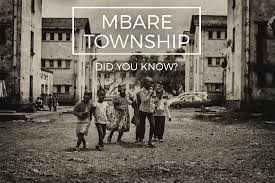
Mbare stands proud as a township born out of colonial segregation, raised by migrant workers, and shaped by traders, musicians, hustlers and everyday dreamers.
Over more than a century, it has morphed into Zimbabwe’s unofficial economic engine where money flows in a marketplace as vivid as the national flag itself.
This is where Zimbabwe comes face to face with its most pronounced potpourri of culture, hustle and diversity.
Established in 1907 as the first Black township in colonial Salisbury, Mbare’s early identity was built by migrant workers from Zambia, Malawi, Mozambique and across rural Zimbabwe.
Their languages, rhythms, trading skills, food and beliefs embroidered a multi-coloured social fabric whose character still defines the suburb today.
From a dusty workers’ settlement, Mbare evolved into a township, then a suburb, and now thrives as a figurative paramilitary wing of the country’s economic rush and home to arguably the most robust marketplace in Zimbabwe.
Mbare Musika remains the country’s largest agricultural exchange point, drawing produce from every corner of Zimbabwe.
Just a short walk away is KwaSiyaso, the unofficial headquarters of street-level entrepreneurship, where tradesmen and artisans service an endless flow of clients.
Urban legend insists that anything that can be found in Zimbabwe can be found in Mbare.
Nearby sits the iconic Magaba which is an industrial backyard turned giant that works round the clock.
Welding, mechanics, carpentry, metalwork and repurposing dominate the landscape, powered by craftspeople who can turn anything into something.
Mbare is both ancient and young, chaotic and organised, loud and layered. It has reinvented itself repeatedly for more than a century.
Sport is woven into this community’s DNA, with Rufaro Stadium celebrated as the ceremonial home of Zimbabwean football.
Stodart Hall and the Netball Complex, in various stages of functionality, stand as markers of Mbare’s unorthodox but persistent pulse. Creatives, too, have risen from here to dizzy heights.
The list of success stories cannot fit into one article, but one truth remains unshakable that money changes hands in Mbare.
Calculating the exact volume of daily cash flow is nearly impossible, but economists and traders agree that Mbare moves more money each day than many small towns combined.
Much of the nation’s domestic trade, especially agriculture, funnels through this suburb. Every tomato, onion, potato, cabbage and mango seems to eventually find its way through Mbare Musika.
At peak seasons, traders estimate that millions of dollars in cash move through the stalls weekly.
Business starts before dawn, with the best bargains snapped up by 9 a.m.
Then comes the languid shopper, before the energy resets for the late-afternoon surge as traders prepare for another cycle.
Mbare also hosts Zimbabwe’s largest transport hub of kombis, cross-border buses, rural-bound vehicles, haulage trucks and dense pedestrian traffic.
Every trip has a fee, a vendor, a hustle and a side hustle.
Back in Magaba, the manufacturing and beneficiation ecosystem thrives around the clock.
Welders, upholsterers, mechanics, panel beaters, pot makers, drum builders and repurposing geniuses turn scrap into industry.
A car shell becomes a cart. A broken fridge becomes a smoker. Nothing goes to waste.
Thrift culture also flourishes, with Nyaningwe and Mupedzanhamo offering a bustling bazaar where “less gets you more” in a fusion of formal retail and the underground flea-market economy.
Conservatively, tens of millions circulate through Mbare monthly and that is just the visible layer of an economic paradox where regulated trade collides with unregulated enterprise.
On the formal side, the new Mbare Musika Traders Market Phase One, commissioned by President Emmerson Mnangagwa in April, underscores national support for small to medium enterprises.
This is where council-managed produce markets, registered bus companies, licensed shops, bonded warehouses and wholesale operations operate with receipts, logs and paperwork.
Across the street lies the thrill of informal Mbare where vendors operate from crates and wheelbarrows, pop-up stalls, and business is strictly cash or instant transfer.
Fresh produce auctions unfold through hand signals, sharp negotiation and the spirited lingo of the street.
Middlemen known as satapiya offer premium service, flipping loads and acting as personal shoppers for a fee from both seller and buyer.
Deals are sealed with a handshake, a nod, a shout and whatever works in the moment.
Mbare’s dual system thrives because it balances itself: structure from the formal, speed from the informal, and convenience from both.
In the midst of all this beautiful, booming cacophony Mbare finds its voice. It is efficient, interconnected, adaptable and capable of serving every class, from rural farmers to high-end restaurants.
Yet the question persists: what is the future of Mbare in an era of regulation, redevelopment and attempts to harness its full potential? Plans come and go, but one truth remains that Mbare will always stake its claim as the foundation and the fibre of what modern Harare is and should be.